Geosyntec Consultants Logo

Mark Ellard

Geosyntec Staff Complete Innovative Creek Restoration Project

2026-03-15T10:20:45-06:00January 29th, 2018|Tags: , , |

Lee Mullon, Mark Ellard, and Mike Hardin (Florida) were recently given the Innovative Project Cost Share (Grant) Award from the St. Johns River Water Management District because it was the most innovative project for completing a creek restoration project in the City of Gainesville, Florida known as Beville Creek.

Geosyntec Consultants at the 9th Annual Southeast Florida Regional Climate Leadership Summit

2026-03-15T10:20:44-06:00December 12th, 2017|Tags: , , , |

Daniel Schauer, Mark Ellard, Tom Amstadt, and Lee Mullon (Florida) will attend the 9th Annual Southeast Florida Regional Climate Leadership Summit at the Broward County Convention Center in Fort Lauderdale, Florida on December 14-15, 2017.

Environmental Data Clearinghouse

2026-04-23T09:45:47-06:00November 28th, 2017|Tags: , , |

Geosyntec’s secure Data Clearinghouse allows custom visualization and reporting of data in Electronic Data Deliverables and data entered into forms or spreadsheets. By e-mailing or uploading les to a dedicated location, you can immediately see those data in a variety of reports (temporal trends, summary statistics, exceedances, etc.) and interactively in a webmap. Data are immediately visible to site managers (or other permitted users), and can be shared with others as desired (e.g., following validation). Any data records that require further information prior to mapping or reporting (unknown locations or analytes, incomplete records, etc.) are immediately sent to site managers for completion, while the remaining data are visible right away. “To say that MDEQ was impressed would be an understatement. They agreed to provide comments based on our data presented through this tool, rather than requesting a series of traditional formal regulatory submittals. There has been substantial cost savings realized by forgoing interim submittals of monitoring and assessment reports.” --Environmental Site Manager, Railway Corporation

Geosyntec Staff to Present at Environmental Permitting Summer School

2026-03-15T10:20:25-06:00July 10th, 2017|Tags: , , , , , , |

Geosyntec staff will present at the 31st Annual Environmental Permitting Summer School at the Harbor Beach Marriott in Ft. Lauderdale, Florida on July 18-21, 2017.

Stormwater Management

2026-04-23T14:26:16-06:00June 1st, 2017|Tags: , , , , , , , , , , , , , , , , , , , , |

A significant aspect of Geosyntec's water and natural resources practice is our stormwater management expertise. In fact, the firm is known for its innovative work in urban stormwater and surface water quality management, including green infrastructure design for CSO controls, Low Impact Development, Best Management Practice (BMP) design, hydromodification management, and erosion and sediment control. Our personnel have helped shape the state of these practices nationally over the past two decades via joint research and project work with civil engineering faculty at outstanding academic institutions, as well as continuous involvement in original research, development, and application of techniques and technologies. As a result, Geosyntec is recognized for frequently facilitating the transfer of technologies from academia to commercial and public use. Our professionals have been a critical and ongoing part of an award-winning team maintaining the ASCE/US EPA International Database on Urban Stormwater BMP Design and Performance.  Geosyntec's experts in erosion control have developed and implemented nationwide site compliance audit programs, and have also provided critical post-fire emergency services after the San Diego and Orange County fires. Stormwater management planning and design (urban, transportation, industrial, commercial, agricultural, MS4 compliance) Sustainable stormwater solutions: green infrastructure, stormwater best management practices, low impact development, rainwater harvesting Stormwater monitoring and modeling Water quality crediting and watershed-based mitigation approaches NPDES permitting and receiving water studies (watershed planning, total maximum daily loads and implementation plans) Erosion and sediment control: Construction NPDES compliance and post-fire erosion and sediment control

Watershed Planning and Stormwater Management

2026-05-27T11:38:15-06:00February 12th, 2015|Tags: , , , , , , , , , , , , , , , , , , , , , , , , , , , , , , , , , , |

State and local governments, utilities, landowners, businesses, and communities must navigate National Pollutant Detection and Elimination System (NPDES) Permit compliance through watershed-scale planning.

Erosion and Sediment Control

2026-03-15T10:46:50-06:00February 12th, 2015|Tags: , , , , , , , , , , , , , , , , , , , , , |

Soil erosion and resulting sedimentation can cause widespread damage to waterways and impact drinking-water quality, endanger wildlife resources, and hinder the flood-control capacity of lakes and reservoirs. For the most challenging projects and construction programs, Geosyntec has extensive experience developing effective stormwater pollution prevention plans (SWPPPs), erosion and sediment (E&S) control and revegetation plans, hydrologic and hydraulic models, and designs for stormwater best management practices (BMPs).

Natural Resource Monitoring

2026-04-23T13:04:19-06:00March 28th, 2014|Tags: , , , , , , , , , , , , , , , , , , , , , , , , , , , , |

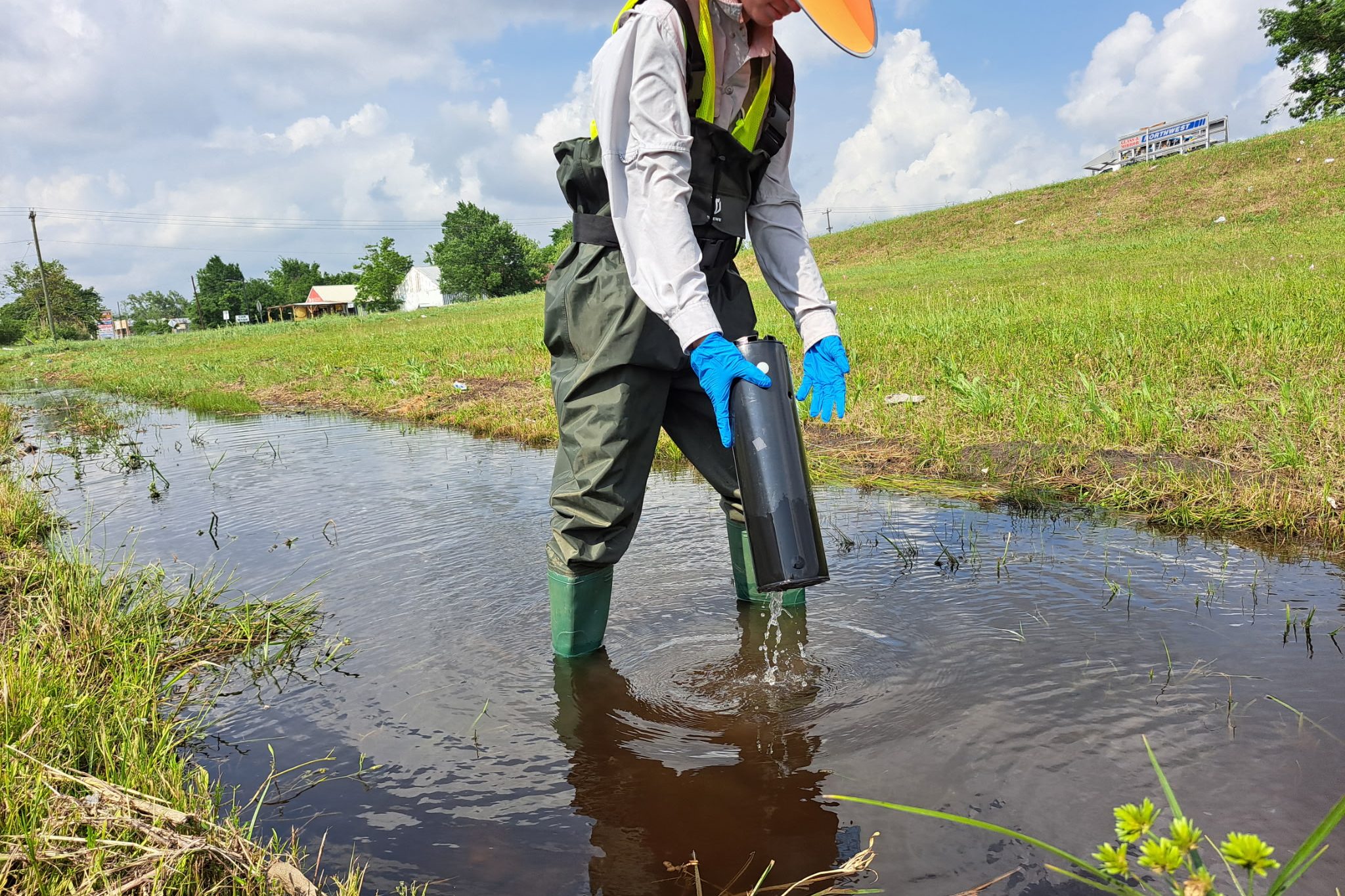
Geosyntec uses biological assessment and monitoring to create an accurate picture of the affected environment. Our services reliably evaluate the health of streams, rivers, lakes, and ocean environments. In addition, we can offer a less expensive alternative to complex chemical testing programs. Relying on deep experience, our team evaluates the ecological health of a given environment to show how organisms integrate the effects of varied stressors at your site over time. This means Geosyntec can characterize long-term ecological issues and understand the status of highly valued biological communities. By examining a variety of species, their life stages, their survival, and their health, Geosyntec deciphers complex relationships among habitats, bioregions, and ultimately, water and sediment quality. Geosyntec has experienced biologists who efficiently conduct fish and invertebrate collection for both site investigations and NPDES-permit compliance. We also partner with industry-leading laboratories to analyze samples, compile metric scores and data into a project database, and use geographic information system capabilities to define spatial relationships and ensure data consistency and comparability. Geosyntec's biological monitoring services include fish tissue collection for analysis of chemicals of concern; fish population and macroinvertebrate/plankton community studies; fish-kill investigations; and sediment infaunal invertebrate studies. We also conduct habitat inventories and assessments; sediment and water quality toxicity testing; ecological risk assessments; and Natural Resource Damage Assessments. Our practitioners compile environmental impact statements for compliance with National Environmental Policy Act requirements and consult with clients on Clean Water Act (CWA) Section 404 wetland permitting, Section 401 water quality certification, and threatened and endangered species surveys related to the Endangered Species Act (ESA) and Section 7 requirements. For more than a dozen clients, Geosyntec has monitored the concentrations of chemicals found in fish tissue over many years. Often, the fish community is exposed to chemicals via direct or indirect uptake from contaminated sediments. By monitoring the fish tissue concentrations over time, the effectiveness of an environmental remedy can be evaluated. Additionally, biota-sediment accumulation models can be developed and refined to support informed management decisions. This has been used for both active remedies (like dredging) and passive remedies (like MNR). These monitoring data provide our clients and the regulatory agencies with an accurate picture of the affected environment.

Discharge Permitting and Receiving Water Studies

2026-04-23T14:52:37-06:00March 28th, 2014|Tags: , , , , , , , , , , , , , , , , , , , , , , , , , , , , , , , |

Geosyntec provides comprehensive water-quality permitting and receiving water-assessment services. Our services include the National Pollutant Discharge Elimination System (NPDES) permitting negotiations and technical support for wastewater and industrial wastewater treatment plant discharges, groundwater discharge, combined sewer overflow systems, and stormwater management. Our water-resources practitioners also specialize in water-quality assessments in large watersheds, rivers, and reservoirs. Many of these projects are multi-year efforts where our services have eliminated unnecessary treatment works, saving clients significant costs. Antidegradation and Water-Quality Reviews Antidegradation and water-quality reviews are essential for permitting wastewater discharge expansions. Regulators use these reviews to determine treatment-system requirements and effluent limitations. Permittees must prepare the review submittals for new or expanded treatment plants. These reviews can range in complexity from basic qualitative evaluations to complex modeling scenarios using actual stream data. Using our thorough understanding of antidegradation and water-quality review processes,we help clients select the most appropriate review approaches when pursuing new or expanded wastewater treatment plants.  Regulators with the US Environmental Protection Agency (USEPA) and state regulators emphasize water-quality-based permitting of municipal, domestic, and industrial wastewater discharges.They do this to address water-quality concerns and attain water-quality standards within receiving streams, rather than basing permits on technology-based limitations that may not adequately protect the specific water resource. Waste-Load Allocation Geosyntec's water-quality-based permitting and waste-load allocation studies may range greatly in complexity, and regulatory involvement and negotiations are critical elements within such projects. Waste-load allocations may be derived using a variety of approaches, and water-quality-based permit limits are derived after determining the most appropriate and defensible waste-load allocation.  Our engineers and scientists use state-of-the-art field monitoring approaches to calibrate water-quality models and establish appropriate water-quality criteria. We have saved our clients several millions of dollars in infrastructure investments by investigating conservative permit assumptions and ensuring a sustainable balance between resource needs and practical budget constraints.

Low Impact Development, Green Infrastructure, Sustainable Practices

2026-04-23T13:00:13-06:00March 28th, 2014|Tags: , , , , , , , , , , , , , , , , , , , , , , , , , , , , |

Low impact development (LID) aims to mimic natural hydrology by using small-scale, decentralized techniques that infiltrate, evaporate, and transpire rainwater. The guiding principles of LID are to reduce imperviousness, disconnect imperviousness, conserve natural resources and areas, maintain natural drainage courses, and minimize clearing and grading. Geosyntec practitioners have designed and integrated a number of innovative system architectures to help clients meet each of these goals. Through the use of the latest green infrastructure (GI) and by implementing new sustainable practices, many of our clients have addressed challenges that previously were intractable, unachievable, or not cost effective using conventional passive solutions. We provide specialized stormwater and watershed management services for private facilities, large developers, stormwater utilities, and municipal agencies throughout the United States and have implemented many of the nation's first GI projects. Our stormwater management specialists form one of the leading practices in the country and include individuals whose applied research earned the American Society of Civil Engineers Civil Engineering State-of-the-Art Award and similar accolades at the state and regional level. Our firm's efforts in LID are geared to lower costs for stormwater infrastructure and maintenance, improve surface water quality and groundwater recharge, and design an attractive, ecologically functional landscape. We also have incorporated LID approaches into new development and retrofit projects to improve control of both quantity and quality of stormwater. Geosyntec personnel continuously shape the state of the practice with projects that involve original research, development, and application of LID techniques. Our engineers and scientists are represented on the Board of Directors of the Low Impact Development Center, a nonprofit organization dedicated to the advancing LID technology, and maintain joint research projects with civil engineering faculty at leading academic institutions.

Go to Top