Geosyntec Consultants Logo

Kathleen Harrison

Hydropower Licensing and Compliance

2026-09-23T13:26:26-06:00April 15th, 2026|Tags: , , , , , , , , , , , , , , , , , , , , , , , , , , , , , , , , , , , , , |

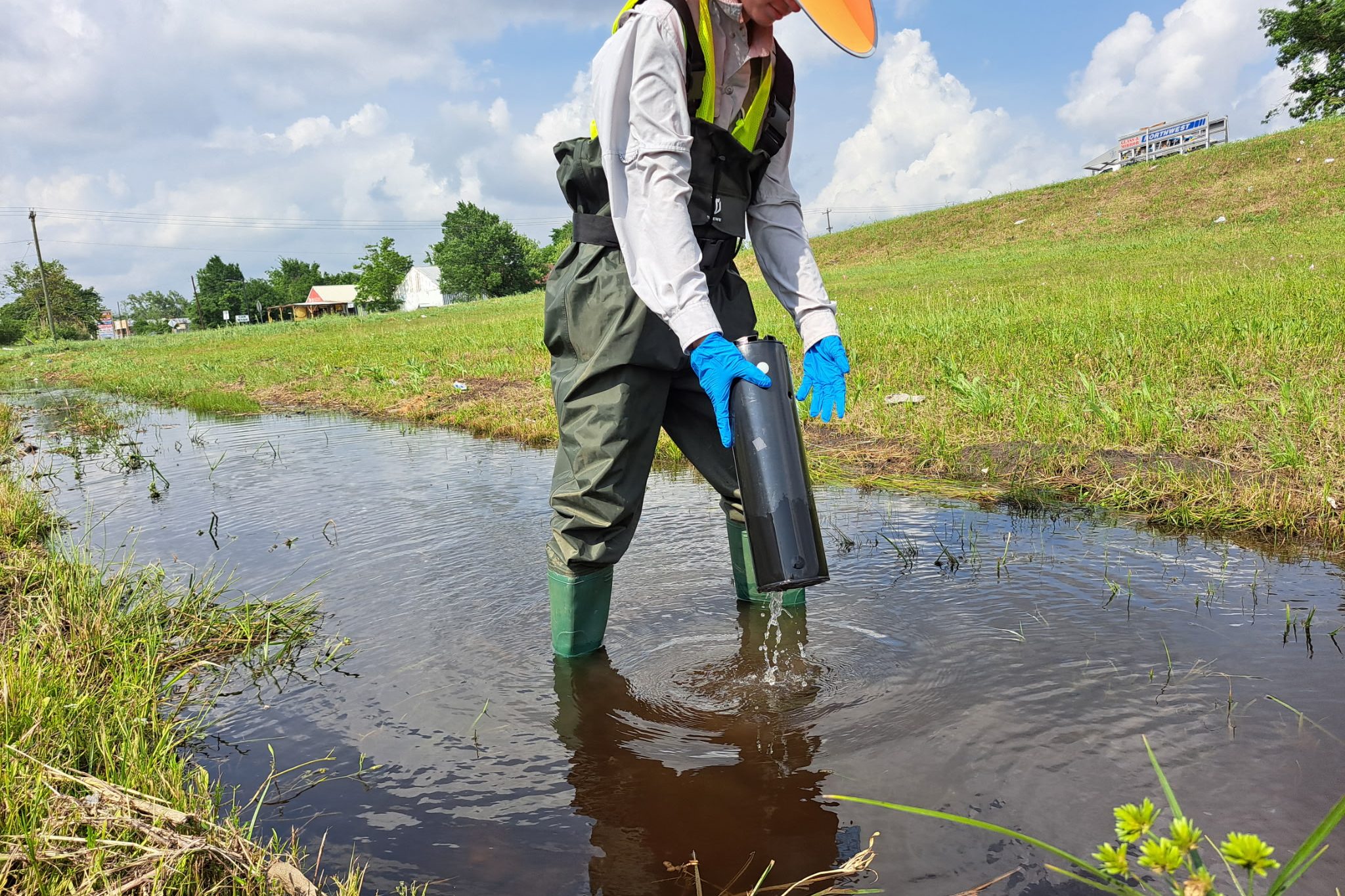
To help clients achieve stringent water quality goals, Geosyntec provides rigorous assessment and modeling services to assess the sources and factors that affect the delivery of critical pollutants across watersheds. Through our comprehensive studies and analyses, we provide technically defensible tools and approaches that can be used in the development of Total Maximum Daily Load (TMDL) calculations and watershed protection plans. In addition, we frequently turn to Use Attainability Analyses to examine site-specific water quality criteria that affect attainability goals under natural, human-caused, and economic conditions. Our hydrodynamic and water-quality models integrate inputs from point and nonpoint sources to support our engineers and scientists as they study impacts on water quality in receiving water. These models allow us to understand the assimilative capacities of a given body of water, propose best management practices that can affect pollutant impacts, and predict the time required for a system to recover after being altered. Using watershed studies, water quality monitoring, and hydrological and hydrodynamic modeling, we also can assess compliance with local, state, and federal water quality standards. Using all this information, we are better able to evaluate the magnitude, frequency, and duration of impacts of a wide variety of pollutant sources. Our practitioners offer extensive experience with geographic information system applications for spatial analysis, planimetric and thematic mapping, and data representation. We employ watershed models including the Watershed Characterization System (WCS), Better Assessment Science Integrating Point and Nonpoint Sources (BASINS), and the Watershed Assessment Model (WAMView). We also employ the Water Quality Analysis Simulation Program (WASP), the Environmental Fluid Dynamics Code (EFDC), and the Stream Water Quality Model (QUAL2K) for hydrodynamic and water-quality models. Our practitioners are at the forefront of policy analyses, regulatory compliance, and technology applications that promote sustainable water resources management and ecosystem restoration. We have extensive experience helping local governments develop and negotiate long-term control plans for combined sewer overflows, National Pollutant Discharge Elimination System (NPDES) permits, and consent orders. We also comment on Clean Water Act issues at the state and national level, including the development of new recreational use criteria for water bodies across the county and for the U.S. Environmental Protection Agency's new framework for integrated planning for wastewater and stormwater.

Geosyntec Announces the Appointment of 17 New Senior Principals

2026-03-15T10:24:49-06:00April 10th, 2024|Tags: , , , , , , , , , , , , , , , , |

The Geosyntec Family of Companies announces the promotion of 17 individuals to the position of Senior Principal. Each of these new Senior Principals has made significant contributions to delivering outstanding projects to first-class clients, developing strong relationships with those clients, building our practices, leveraging their own expertise and experience of their colleagues, recruiting outstanding staff, and working collaboratively with their coworkers.

Kathleen Harrison to Present at Master Class for the Western Chapter of the International Erosion Control Association

2026-03-15T10:23:23-06:00February 3rd, 2022|Tags: |

Kathleen Harrison, P.G. QSP, QSD, QISP, ToR, REA, (California) will present on Regulatory and Post-Fire Assessment at the Master Class in Erosion and Sediment Control with Post-Fire Remediation and Field Demonstrations at the Quail Hill Community Center in Irvine, California, February 2–3, 2022.

Danielle Kerper, Kathleen Harrison, and Julie Riggio to Present on Source Tracking for IGP Compliance and Cannabis Environmental Compliance at the IEA Annual Environmental Conference

2026-03-15T10:21:05-06:00September 27th, 2018|Tags: , |

Danielle Kerper, P.G., QSD, QSP, QISP, Kathleen Harrison, P.G. QSP, QSD, QISP, ToR, and Julie Riggio, QISP, QSP (California) will participate in the Industrial Environmental Association (IEA) 34th Annual Environmental Conference at the San Diego Convention Center on September 27-28, 2018.

Geosyntec Awarded 2017 Outstanding Geotechnical Project by ASCE San Diego

2026-03-15T10:20:29-06:00August 4th, 2017|Tags: , , , , , |

Geosyntec was awarded the 2017 Outstanding Geotechnical Project by the San Diego Section of the American Society of Civil Engineers (ASCE) for the Alta La Jolla Drainage Repair – Phase 2 Project in California.

Geosyntec to Present at CASQA

2026-03-15T10:19:52-06:00September 8th, 2016|Tags: , , , , , , , , , , , , , , , , , , , , |

Please join Geosyntec at the California Stormwater Quality Association (CASQA) Gold Stormwater Steward Sponsor for a meet and greet with our experts that are speaking at the following sessions and workshops in San Diego on September 11-14, 2016.

Erosion and Sediment Control

2026-03-15T10:46:50-06:00February 12th, 2015|Tags: , , , , , , , , , , , , , , , , , , , , , |

Soil erosion and resulting sedimentation can cause widespread damage to waterways and impact drinking-water quality, endanger wildlife resources, and hinder the flood-control capacity of lakes and reservoirs. For the most challenging projects and construction programs, Geosyntec has extensive experience developing effective stormwater pollution prevention plans (SWPPPs), erosion and sediment (E&S) control and revegetation plans, hydrologic and hydraulic models, and designs for stormwater best management practices (BMPs).

Watershed Planning and Stormwater Management

2026-05-27T11:38:15-06:00February 12th, 2015|Tags: , , , , , , , , , , , , , , , , , , , , , , , , , , , , , , , , , , |

State and local governments, utilities, landowners, businesses, and communities must navigate National Pollutant Detection and Elimination System (NPDES) Permit compliance through watershed-scale planning.

Low Impact Development, Green Infrastructure, Sustainable Practices

2026-04-23T13:00:13-06:00March 28th, 2014|Tags: , , , , , , , , , , , , , , , , , , , , , , , , , , , , |

Low impact development (LID) aims to mimic natural hydrology by using small-scale, decentralized techniques that infiltrate, evaporate, and transpire rainwater. The guiding principles of LID are to reduce imperviousness, disconnect imperviousness, conserve natural resources and areas, maintain natural drainage courses, and minimize clearing and grading. Geosyntec practitioners have designed and integrated a number of innovative system architectures to help clients meet each of these goals. Through the use of the latest green infrastructure (GI) and by implementing new sustainable practices, many of our clients have addressed challenges that previously were intractable, unachievable, or not cost effective using conventional passive solutions. We provide specialized stormwater and watershed management services for private facilities, large developers, stormwater utilities, and municipal agencies throughout the United States and have implemented many of the nation's first GI projects. Our stormwater management specialists form one of the leading practices in the country and include individuals whose applied research earned the American Society of Civil Engineers Civil Engineering State-of-the-Art Award and similar accolades at the state and regional level. Our firm's efforts in LID are geared to lower costs for stormwater infrastructure and maintenance, improve surface water quality and groundwater recharge, and design an attractive, ecologically functional landscape. We also have incorporated LID approaches into new development and retrofit projects to improve control of both quantity and quality of stormwater. Geosyntec personnel continuously shape the state of the practice with projects that involve original research, development, and application of LID techniques. Our engineers and scientists are represented on the Board of Directors of the Low Impact Development Center, a nonprofit organization dedicated to the advancing LID technology, and maintain joint research projects with civil engineering faculty at leading academic institutions.

Go to Top