Geosyntec Consultants Logo

Scott Promer

Stormwater Management

2026-04-23T14:26:16-06:00June 1st, 2017|Tags: , , , , , , , , , , , , , , , , , , , , |

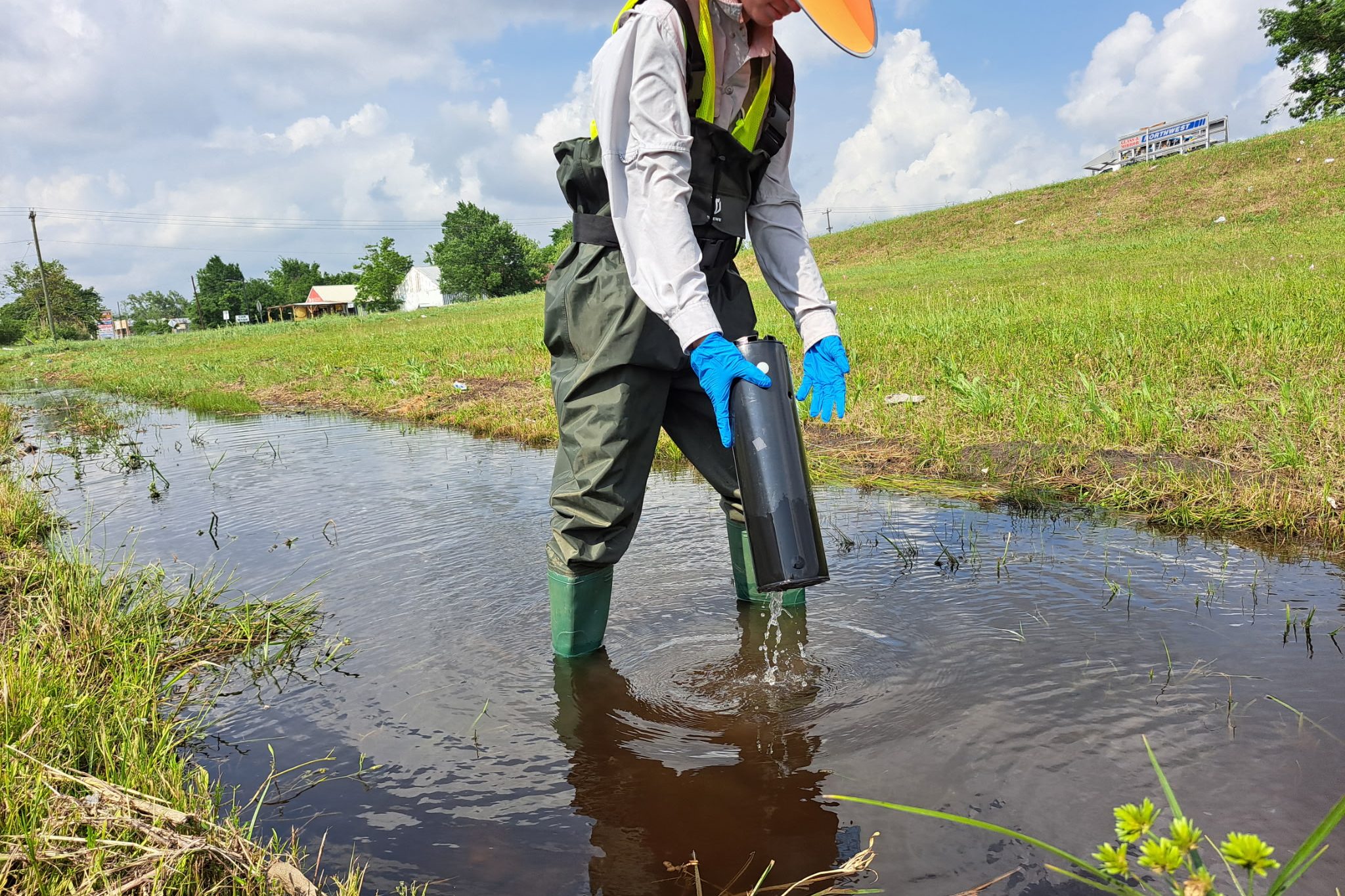
A significant aspect of Geosyntec's water and natural resources practice is our stormwater management expertise. In fact, the firm is known for its innovative work in urban stormwater and surface water quality management, including green infrastructure design for CSO controls, Low Impact Development, Best Management Practice (BMP) design, hydromodification management, and erosion and sediment control. Our personnel have helped shape the state of these practices nationally over the past two decades via joint research and project work with civil engineering faculty at outstanding academic institutions, as well as continuous involvement in original research, development, and application of techniques and technologies. As a result, Geosyntec is recognized for frequently facilitating the transfer of technologies from academia to commercial and public use. Our professionals have been a critical and ongoing part of an award-winning team maintaining the ASCE/US EPA International Database on Urban Stormwater BMP Design and Performance.  Geosyntec's experts in erosion control have developed and implemented nationwide site compliance audit programs, and have also provided critical post-fire emergency services after the San Diego and Orange County fires. Stormwater management planning and design (urban, transportation, industrial, commercial, agricultural, MS4 compliance) Sustainable stormwater solutions: green infrastructure, stormwater best management practices, low impact development, rainwater harvesting Stormwater monitoring and modeling Water quality crediting and watershed-based mitigation approaches NPDES permitting and receiving water studies (watershed planning, total maximum daily loads and implementation plans) Erosion and sediment control: Construction NPDES compliance and post-fire erosion and sediment control

Watershed Planning and Stormwater Management

2026-05-27T11:38:15-06:00February 12th, 2015|Tags: , , , , , , , , , , , , , , , , , , , , , , , , , , , , , , , , , , |

State and local governments, utilities, landowners, businesses, and communities must navigate National Pollutant Detection and Elimination System (NPDES) Permit compliance through watershed-scale planning.

Overview of Air Quality Management and Air Pollution Control

2026-09-11T10:09:08-06:00November 12th, 2014|Tags: , , , , , , , , , , , , , , , , , , , , , , , , , , , , , , , , , , , , , |

Government regulations for air quality and emissions continue to rapidly evolve. Companies must understand, plan for, and adhere to rapidly changing requirements including monitoring, testing, emissions control, recordkeeping, and reporting. Attaining and maintaining compliance while minimizing operational and financial impacts can be a challenge, particularly in today’s regulatory climate. Geosyntec's comprehensive understanding of air quality laws and regulations, along with our expertise in state-of-the-practice emissions control and monitoring technologies, equip us to provide our clients with innovative and cost-effective solutions for their air quality compliance challenges. Our practitioners offer clients a broad array of services, including permitting, compliance reporting, and air pollution control technology selection and optimization. Our projects routinely involve minor and major source air permitting, compliance assistance, and regulatory negotiations, as well as air pollution control equipment troubleshooting, optimization, and testing. Air Permitting On behalf of clients, we create unique solutions that often help them avoid major source permitting requirements, like Prevention of Significant Deterioration (PSD) or nonattainment area New Source Review (NSR). Relying on our extensive knowledge of operating permit programs and our experience in a broad range of industries and emissions sources, we offer clients permitting assistance that aligns with federal, state, and local air jurisdictions. We craft strategic approaches to air quality challenges. When major source permitting cannot be avoided, our air dispersion modelers and control technology experts know how to respond to challenges associated with major source permitting requirements. Geosyntec’s experts address control technology evaluations, including Best Available Control Technology (BACT) and Lowest Achievable Emission Rate (LAER) evaluations. They are also adept at understanding and conducting ambient air impact analyses, like National Ambient Air Quality Standards (NAAQS), Prevention of Significant Deterioration (PSD) increments, and state toxic air pollutant (TAP) demonstrations. Air Compliance and Reporting With federal, state, and local air quality regulations constantly in flux, maintaining compliance can be a burden on businesses. Our nuanced understanding of policies, regulations, and drivers empowers us to craft effective and efficient compliance solutions for our clients to help them address challenges and remain in compliance. Together, we develop frameworks for comprehensive environmental management strategies that help clients meet air compliance and reporting requirements. Some of the compliance programs we helped design include those governing emission inventory reporting; Title V annual and semiannual reporting; greenhouse gas (GHG) reporting; and deviation reporting. Evaluation and Optimization of Air Quality Control Devices Our practitioners evaluate air pollution control devices and advise clients to help them meet emission standards and minimize operational costs. Our project experience includes combustion management and tuning for boilers, thermal oxidizers, and other combustion devices. We also specialize in area and source measurement of complex pollutants such as mercury, sulfur trioxide (SO3) and per- and polyfluoroalkyl substances (PFAS), Geosyntec has installed state-of-the-practice hardware and software using cross-duct lasers to continuously monitor ammonia (NH3) and SO3. In addition, we can assist clients with selection of continuous emission monitoring systems (CEMS) and offer operational assistance, data management, and equipment maintenance. Continuous Emission Monitoring System Design and Ambient Air Monitoring Geosyntec has supported clients with development of comprehensive environmental management strategies, optimization of plant operations, and increasing efficiency of their air emissions control systems. This has included installation, evaluation, and enhancement of CEMS at point sources and ambient air monitoring systems for fence line or offsite monitoring. Air Litigation Support Leading law firms throughout the United States seek technical support from Geosyntec due to our expertise and credibility providing litigation support. Geosyntec provides resources for attorneys to advocate for their clients’ interests on a myriad of air subjects related to business transactions, environmental management, compliance and enforcement, toxic tort, and general litigation topics. Geosyntec’s team of senior air professionals frequently provide expert witness testimony opinion reports, claims assessments, and agency negotiations and settlement support. Advancing the State of the Practice Experts in process and air pollution control technology design, we help clients develop strategic approaches to complex, multipollutant emission issues and provide clients with a balanced approach to plant operations. In the electric power industry, Geosyntec practitioners design strategies that reduce the amount of coal required to produce energy through improvements in fuel use, waste generation systems, and air pollution controls. Optimal air pollution controls, such as selective catalytic reduction (SCR, or thermal oxidizers), can result in substantial fuel savings and decrease emissions through improved performance of control devices. Geosyntec practitioners frequently collaborate with colleagues and industry peers at the USEPA, the US Department of Energy (DOE), the Electric Power Research Institute (EPRI), the Air and Waste Management Association (AWMA), and other organizations on new strategies for reducing air quality impacts. These collaborate strategies involve NOx control, mercury capture, scrubber optimization for heavy metals, catalyst selection and optimization, and plume opacity mitigation. In addition, our experts have developed methods to measure emissions of specific pollutants under complex operating conditions which have been accepted by air agencies across the country. Representative Services Air Permitting for New Facilities and Facility Expansions Air Pollution Control Engineering Ambient Air Monitoring and Source Testing Program Support Air Dispersion Modeling, Accidental Release, and Computational Fluid Dynamics (CFD) Modeling Carbon Management and Greenhouse Gas Inventories Compliance Reporting and Auditing Services Capital Project Permitting Assessments Emission Inventories and Mobile Source Studies Feedstock Testing Analyses to maximize Air Pollution Source Control Health Risk Assessments Indoor Air Quality Monitoring and Management Litigation Support and Expert Witness Testimony Odor and Noise Modeling, Monitoring, and Control Operator and Employee Training Process Engineering and Controls Optimization Regulatory Strategy and Compliance Management Strategic Technical Support to Trade Associations

Overview of Waste Management Planning, Engineering & Design

2026-04-29T11:39:03-06:00November 12th, 2014|Tags: , , , , , , , , , , , , , , , , , , , , , , , , , , , , , , , , , , , , , , , , , , , , , , , , , , , , , , , , , , , , , , , , , , , , , , , , , , , , , , , , , , , , , , , , |

Geosyntec is a recognized leader in waste containment facility permitting and design. From concept to implementation, we assist our clients in achieving efficient, safe, and secure containment of their regulated wastes that require land disposal. Our practitioners assist our clients in increasing commercial viability, achieving and maintaining compliance, and ensuring that short- and long-term needs are met for new and existing sites and projects. We are experienced in the permitting, design, and construction of expansions and closures of: Municipal solid waste (MSW) landfills Hazardous waste landfills Coal combustion residual landfills Construction and demolition waste landfills Radiological and mixed waste landfills Tailings impoundments Mine waste rock piles and dumps Our waste containment practice specializes in addressing the most complex and challenging projects through our innovative technologies and designs. Our practitioners assist clients with permitting greenfield sites and existing site expansions, maximizing disposal capacity, and solving complex site challenges.   Our practitioners also provide investigation, design, permitting, and construction oversight for on-site disposal facilities for cost-effective, safe on-site disposal of soils, sludges, and miscellaneous debris with a broad range of contaminants, including mercury, PCBs, and volatile and semi-volatile organic compounds.

Urban Stormwater Management, Planning, & Design

2026-05-04T12:16:00-06:00March 27th, 2014|Tags: , , , , , , , , , , , , , , , , , , , , , , , , , , , , , , , , , , , , , , |

Geosyntec's engineers and scientists stand among the world's foremost experts in urban stormwater management. We are innovators who design best management practices to mitigate impacts to surface water quality, enhance water conservation strategies, and contribute to municipal water supplies. Our professionals develop and implement comprehensive water quality master plans and site-specific designs using green infrastructure concepts for long-term stormwater control. We also guide the development and design of construction, industrial, and municipal programs for National Pollutant Discharge Elimination System (NPDES) regulatory program compliance. We have evaluated the opportunities, constraints, effectiveness, and costs associated with a variety of low impact development and green-streets options and have provided conventional treatment control BMPs for maintaining water quality control. We provide end-to-end solutions for a wide variety of applications from proprietary cistern sizing and optimization modeling and water collection and pre-filtration strategies, to designs for filtration, treatment, and water distribution systems. Our water resources engineers specialize in surface-water and groundwater interactions, ecosystem restoration, multi-beneficial project development, hydromodification management, and erosion and sediment control. In addition, our practitioners have been instrumental in developing, publishing, and supporting numerous stormwater guidance and design manuals. Geosyntec professionals established and continue to contribute to the International Database on Urban Stormwater BMP Design and Performance. We frequently present state-of-the-practice training sessions and workshops on stormwater management, NPDES regulatory program requirements, erosion and sediment control technologies, and BMP performance and design.

Radiological Waste Management and Disposal Facilities

2026-06-03T11:14:05-06:00March 27th, 2014|Tags: , , , , , , , , , , , , , , , , , , , , , , |

Geosyntec's practitioners work with regulators and stakeholders to develop solutions for a range of radiological challenges, including waste management and disposal, waste packaging and transportation, facility decontamination and decommissioning (D&D), and environmental restoration for government and private clients. Our established credibility with regulators contributes to securing the approvals needed to move demanding projects forward in a timely manner. Engineering and designing containment facilities for the safe, long-term disposal of radiological and mixed (radiological and hazardous) wastes challenges the norms in terms of technology demonstration, design life, and material performance. The extremely long half-lives of many radionuclides present in these wastes mean that the radiological characteristics of these materials will be persistent over long periods of time. This requires that they be disposed and managed in a controlled manner as a disposal facility ages. The levels of radioactivity within the waste disposed of in a facility also need to be considered during the long-term evaluations, or performance assessments. Geosyntec has conducted performance assessments under several different regulatory settings to demonstrate that the disposal facilities are protective of human health and the environment, assessing both internal risks as the waste decays within the disposal facility and external to disposal facilities as the performance of the landfill construction materials age and are modeled at very long times (e.g., hundreds to thousands of years) to eventually transmit leachate and contaminants to the underlying geology. The results of the performance assessments are crucial towards our clients understanding of their design choices and future liabilities. When the U.S. Department of Energy (DOE) decided to decommission its nuclear weapons complex facilities at Fernald, Ohio, they relied on our expertise to design and provide construction quality assurance services for the low-level radioactive waste disposal facilities built to contain impacted soils and demolition debris. Geosyntec met aggressive DOE schedule requirements and delivered award-winning, state-of-the-art facilities with a design life of at least 200 years using currently available technology. In doing so, we helped DOE and its contractor teams complete site closure years ahead of their original schedules, and billions below the original estimate. When DOE decided to decommission its nuclear weapons complex facility at Portsmouth, Ohio, Geosyntec was again tapped to provide design and permitting for the on-site waste disposal facility. Geosyntec has also successfully assisted clients in the related practice area of management and containment of by-products and wastes that contain naturally occurring radioactive materials (NORM) associated with ore processing residuals. For example, a multinational company owned a processing facility with NORM and Technologically Enhanced Naturally Occurring Radioactive Material (TENORM) containing uranium and thorium impacts to buildings, equipment, and process area soils. Geosyntec assessed and characterized site conditions, then designed a secure, on-site disposal facility, dismantled ore processing equipment, and impacted soils. Our design addressed the liner and cover containment systems; sequencing for constructing, filling, and closing the facility; facility operation and maintenance; and post-closure environmental monitoring. The requirement to consider a performance over a period of more than 10,000 years led to significant challenges in design and modeling of the disposal facility. As the general contractor for the project, we implemented a stringent construction and radiological safety program. This included establishing and operating an on-site radiological laboratory capable of measuring gross alpha/beta activity and gamma spectroscopy on debris, impacted soils, airborne particulates, and water. When complete, over 11,000 loads of excavated soils and plant debris (or 75,000 cubic meters) were transported and disposed of in the facility and more than 87,000 drums were retrieved, processed, transported and disposed. The project was completed with more than 1 million man-hours without either a lost-time accident or a radiological incident, a testament to the importance of safety and the safety culture that Geosyntec has established.

Go to Top