
Detailed Site Assessment and Long-term Management Strategy for a Nitrobenzene DNAPL Impacted Site
Detailed Site Assessment and Long-term Management Strategy for a Nitrobenzene DNAPL Impacted Site
Client
Confidential Client
Services Provided
Peer review, High resolution characterization studies, Groundwater - surface water interaction studies, CSM development, Long-term management strategy development and implementation, Regulatory negotiation

Location
United Kingdom
Project Practice Areas
Water and Natural Resources
Type of Facility
Nitrobenzene DNAPL site
Project Specifics
Historical nitrobenzene production operations resulted in nitrobenzene dense non-aqueous phase liquid (DNAPL) impacts at depth within a stratified alluvial aquifer. An associated nitrobenzene groundwater plume was discharging to an adjacent river.
Geosyntec Scope of Services
Initially acting to peer review the site characterization and remedial options appraisal work of others, Geosyntec were retained to improve conceptual understanding of groundwater plume dynamics and crucial groundwater-surface water interactions, ultimately leading to the development of a cost-saving long-term liability management strategy. Geosyntec’s detailed site investigations involved high resolution vertical profiling of the alluvial aquifer in targeted transects across the area of interest using CPT/MIP/HPT techniques, combined with depth discrete groundwater sampling via the continuous profile tooling. The results informed placement of nested well pairs used to characterize the groundwater plume extent in 3 dimensions. Concurrent investigation of groundwater – surface water interactions used simple hydro-chemical profiling of surface water quality along the riverbank to identify potential points of contaminated groundwater ingress. The locations of pH, electrical conductivity and redox changes guided placement of drive-point piezometers into the shallow riverbed which were sampled to delineate and quantify discrete zones of nitrobenzene flux into the river. Groundwater flow and contaminant transport modelling was undertaken, supported by detailed site characterization and hydraulic testing data.
This suite of advanced investigation techniques was successfully combined to identify a high strength nitrobenzene plume tracking the base of the alluvial aquifer within a higher permeability flow zone. Near river, hydraulic gradients were forcing the plume to rise and dilute within overlying cleaner groundwater. A single 15 – 20 m wide zone of contaminant plume discharge into the river was delineated. Groundwater modelling identified feasible options for targeted hydraulic containment of the plume to manage the risk driving discharge of nitrobenzene to surface water.
Notable Accomplishments
Geosyntec used advanced site investigation methods to develop and refine conceptual understanding of a long-standing liability for the client. A clearer understanding of the risk driving processes and pathways enabled a cost-effective hydraulic containment strategy to be developed, providing the client with a feasible alternative to long-term liability management.
Related Projects

Los Angeles Department of Water and Power
Los Angeles, California

Bay Area Stormwater Management Agencies Association (BASMAA)
San Francisco Bay Area, California

New York State Department of Environmental Conservation
New York State, USA

City of Los Angeles, Bureau of Sanitation; CDM
Los Angeles, California
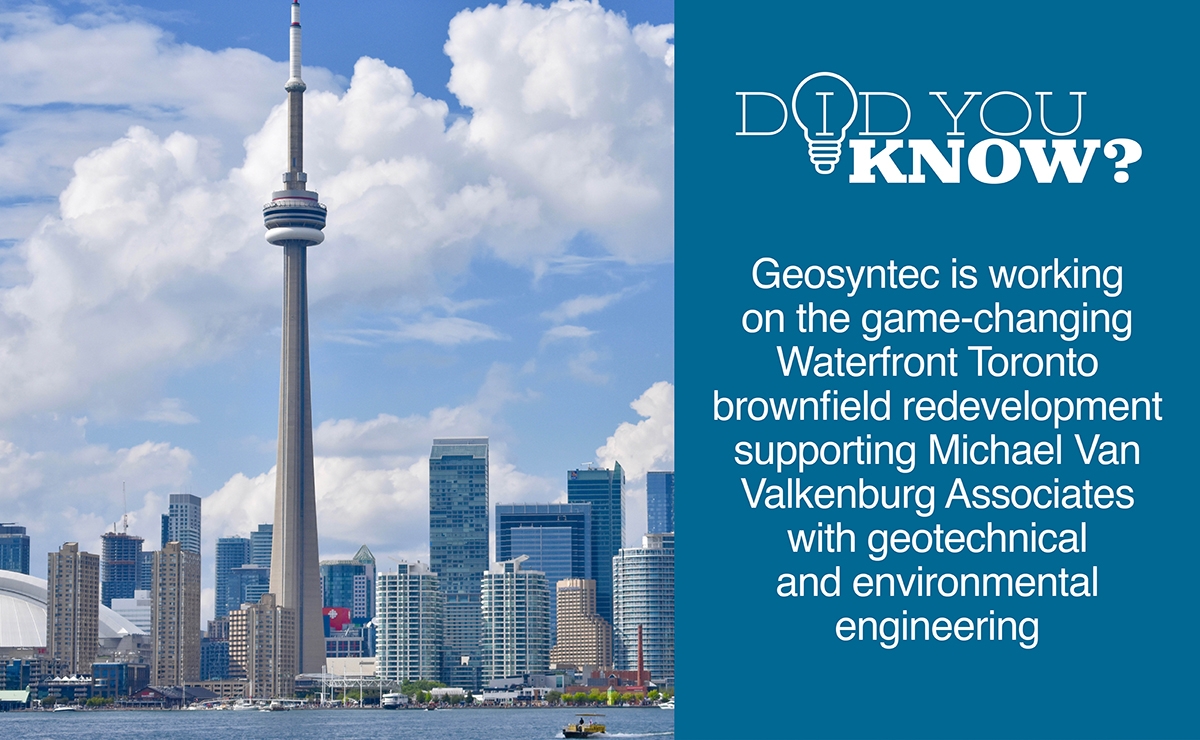
Michael Van Valkenburgh Associates Inc.
Toronto, Ontario, Canada

68th Street Site Work Group
Rosedale, Maryland


