Geosyntec Consultants Logo

Europe

Underground Construction Information Management System for itmsoil

2026-04-02T16:45:52-06:00November 22nd, 2024|

An underground construction information management system (UCIMS) was developed by itmsoil to monitor construction data from the new east–west rail link across London known as the Crossrail. The Crossrail project construction works, Europe's biggest construction project, includes underground development, comprising shafts, tunnels, and portals that extend beneath the already congested London underground. Given the urban environment in which tunneling and other construction are occurring, monitoring of the construction works and of the impact on adjacent underground and aboveground structures were key activities for the project management and engineering teams. The UCIMS monitors tens of thousands of real-time geotechnical instruments and structural sensors as well as overall construction progress. In addition to performance monitoring of a host of construction activities, the UCIMS also tracks the progress and performance of tunnel boring bachines. The UCIMS was designed to provide real-time access for all stakeholders to the construction and instrumentation data, and it called for an intuitive, map-based user interface, showing progress and data locations relative to the surface features and other spatial information.

Confidential Client Greenhouse Gas Inventory Audit and Verification United States and Europe

2026-04-06T13:36:54-06:00September 21st, 2023|

A global manufacturing client with over 100 facilities across North America, Europe, and the South Pacific sought an independent audit of their 2022 greenhouse gas (GHG) corporate emissions statement before submitting it to the CDP for public disclosure.

Holistic Due Diligence, Environmental, Health, and Safety Compliance

2026-04-02T16:32:52-06:00October 24th, 2022|

Lantmännen, an agricultural cooperative and Northern Europe’s leader in agriculture, machinery, bioenergy, and food products, retained Geosyntec to undertake our unique holistic due diligence. The target, specialty fuel supplier Coryton, has a strong base in the United Kingdom and operates in Europe and the American continents. If successful, the acquisition would give Lantmännen opportunities and synergies within the growing sustainable fuel segment.

Environmental Due Diligence Phase I ESA and Phase II GI for a Complicated Target Site Dating from 1777

2026-04-02T12:06:16-06:00October 21st, 2022|

Geosyntec was retained by a major food and beverage process engineering and machinery manufacturer to undertake environmental due diligence; the global target company manufactured seed processing machinery used to produce vegetable and plant-based food-grade oils. The facility, in Kingston-Upon-Hull, Yorkshire, England, had been at the same location since 1777 and had undertaken many building projects through the centuries, the latest of which was in response to the destruction of the facility, adjacent buildings, and infrastructure during the Hull Blitz in 1941.

DNAPL Impacted Fractured Limestone Aquifer Characterization & Remedial Design

2026-04-02T17:10:02-06:00August 19th, 2021|

A geologically complex site in Ireland required expert consulting services to address multiple liability issues, including the remediation of a TCE groundwater plume within a fractured bedrock aquifer which was migrating towards a local town and a nearby major river.

Electrokinetic Enhanced Bioremediation (EK-BIOTM) Full-Scale Implementation for Source Area Remediation in Clay Till

2026-04-02T16:19:31-06:00January 6th, 2021|

A significant portion of the near-surface geology in Denmark includes glacial moraine deposits, much of which consists of clayey till. Consequently, subsurface releases and spills of chlorinated solvents at industrial facilities in Denmark often end up as a sorbed phase or nonaqueous phase liquid (NAPL) that resides in clayey till.

Detailed Site Assessment and Long-term Management Strategy for a Nitrobenzene DNAPL Impacted Site

2026-05-26T08:26:02-06:00December 2nd, 2020|

Historical nitrobenzene production operations resulted in nitrobenzene dense non-aqueous phase liquid (DNAPL) impacts at depth within a stratified alluvial aquifer. An associated nitrobenzene groundwater plume was discharging to an adjacent river.

Chromated Copper Arsenate (CCA) Wood Treatment Sites State-of-the-Practice Review of Remediation Technologies

2026-05-26T09:11:30-06:00June 26th, 2017|

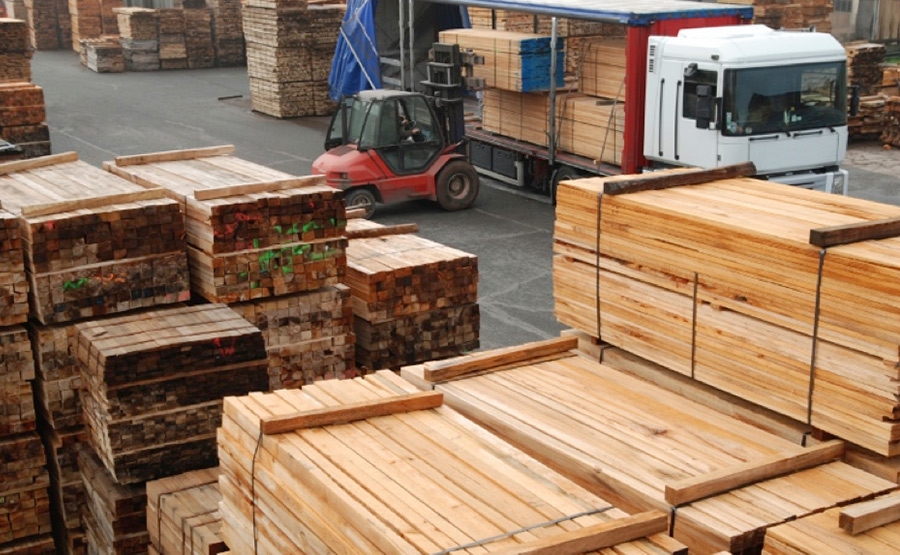
Historical use of chromated copper arsenate (CCA) for treatment of building lumber has resulted in legacy arsenic and chromium contamination at dozens of wood treatment sites in Denmark.CCA is a highly acidic (pH 1-2) solution of salts (chromium oxide [CrO3] and copper oxide [CuO]) and arsenic acid (H3AsO4) that is pressure-injected into wood to protect it against insect and fungi damage. Arsenic (As[V]) serves as an insecticide, copper (Cu[II]) as a fungicide, and hexavalent chromium (Cr[VI]) as a fixing agent.  Estimates indicate that CCA-treated waste wood in Denmark increased from 17,000 tons in 1992 to 100,000 tons in 2010.

In Situ Alkaline Hydrolysis of Organophosphorus Pesticides Enhanced by Acoustic Vibration and Surfactant Flushing

2026-05-26T09:08:39-06:00June 26th, 2017|

The Høfde 42 pesticide waste disposal site is recognized as the most toxic contaminated site in Denmark.  Between 1953 and 1962, the agrichemical manufacturing company Cheminova, with approval of Danish authorities, disposed of hundreds of tons of organophosphorus pesticide (OPP) and pesticide manufacturing wastes in pits at this site, which is located at a beach adjacent to the North Sea. 

ISCO and Sequenced ISCO-Bioremediation for Remediation of Mixed Chlorinated Solvent DNAPL and Veterinary Antibiotics

2026-04-14T11:14:46-06:00June 26th, 2017|

Groundwater in Denmark that has been contaminated with chlorinated solvents is often remediated using in situ chemical oxidation (ISCO) with permanganate, or bioremediation via in situ enhanced biological reductive dechlorination (ERD).  Although ISCO using Fenton's reagent is a commonly used technology in North America for remediation of chlorinated solvents present in the subsurface as dense nonaqueous phase liquid (DNAPL), in Denmark the technology is still considered relatively unproven. 

Go to Top