Geosyntec Consultants Logo

Ken Susilo

Watershed Planning and Stormwater Management

2026-05-27T11:38:15-06:00February 12th, 2015|Tags: , , , , , , , , , , , , , , , , , , , , , , , , , , , , , , , , , , |

State and local governments, utilities, landowners, businesses, and communities must navigate National Pollutant Detection and Elimination System (NPDES) Permit compliance through watershed-scale planning.

Erosion and Sediment Control

2026-03-15T10:46:50-06:00February 12th, 2015|Tags: , , , , , , , , , , , , , , , , , , , , , |

Soil erosion and resulting sedimentation can cause widespread damage to waterways and impact drinking-water quality, endanger wildlife resources, and hinder the flood-control capacity of lakes and reservoirs. For the most challenging projects and construction programs, Geosyntec has extensive experience developing effective stormwater pollution prevention plans (SWPPPs), erosion and sediment (E&S) control and revegetation plans, hydrologic and hydraulic models, and designs for stormwater best management practices (BMPs).

Discharge Permitting and Receiving Water Studies

2026-04-23T14:52:37-06:00March 28th, 2014|Tags: , , , , , , , , , , , , , , , , , , , , , , , , , , , , , , , |

Geosyntec provides comprehensive water-quality permitting and receiving water-assessment services. Our services include the National Pollutant Discharge Elimination System (NPDES) permitting negotiations and technical support for wastewater and industrial wastewater treatment plant discharges, groundwater discharge, combined sewer overflow systems, and stormwater management. Our water-resources practitioners also specialize in water-quality assessments in large watersheds, rivers, and reservoirs. Many of these projects are multi-year efforts where our services have eliminated unnecessary treatment works, saving clients significant costs. Antidegradation and Water-Quality Reviews Antidegradation and water-quality reviews are essential for permitting wastewater discharge expansions. Regulators use these reviews to determine treatment-system requirements and effluent limitations. Permittees must prepare the review submittals for new or expanded treatment plants. These reviews can range in complexity from basic qualitative evaluations to complex modeling scenarios using actual stream data. Using our thorough understanding of antidegradation and water-quality review processes,we help clients select the most appropriate review approaches when pursuing new or expanded wastewater treatment plants.  Regulators with the US Environmental Protection Agency (USEPA) and state regulators emphasize water-quality-based permitting of municipal, domestic, and industrial wastewater discharges.They do this to address water-quality concerns and attain water-quality standards within receiving streams, rather than basing permits on technology-based limitations that may not adequately protect the specific water resource. Waste-Load Allocation Geosyntec's water-quality-based permitting and waste-load allocation studies may range greatly in complexity, and regulatory involvement and negotiations are critical elements within such projects. Waste-load allocations may be derived using a variety of approaches, and water-quality-based permit limits are derived after determining the most appropriate and defensible waste-load allocation.  Our engineers and scientists use state-of-the-art field monitoring approaches to calibrate water-quality models and establish appropriate water-quality criteria. We have saved our clients several millions of dollars in infrastructure investments by investigating conservative permit assumptions and ensuring a sustainable balance between resource needs and practical budget constraints.

Environmental Forensic Studies

2026-04-23T10:12:07-06:00March 28th, 2014|Tags: , , , , , , , , , , , , , , , , , , , , , , , , |

Drawing on decades of experience in chemistry, biochemistry, ecology, and biology, our engineers and scientists conduct field and laboratory investigations to identify or characterize biological and chemical challenges impacting soil, sediment, groundwater, surface water, and waste.

Low Impact Development, Green Infrastructure, Sustainable Practices

2026-04-23T13:00:13-06:00March 28th, 2014|Tags: , , , , , , , , , , , , , , , , , , , , , , , , , , , , |

Low impact development (LID) aims to mimic natural hydrology by using small-scale, decentralized techniques that infiltrate, evaporate, and transpire rainwater. The guiding principles of LID are to reduce imperviousness, disconnect imperviousness, conserve natural resources and areas, maintain natural drainage courses, and minimize clearing and grading. Geosyntec practitioners have designed and integrated a number of innovative system architectures to help clients meet each of these goals. Through the use of the latest green infrastructure (GI) and by implementing new sustainable practices, many of our clients have addressed challenges that previously were intractable, unachievable, or not cost effective using conventional passive solutions. We provide specialized stormwater and watershed management services for private facilities, large developers, stormwater utilities, and municipal agencies throughout the United States and have implemented many of the nation's first GI projects. Our stormwater management specialists form one of the leading practices in the country and include individuals whose applied research earned the American Society of Civil Engineers Civil Engineering State-of-the-Art Award and similar accolades at the state and regional level. Our firm's efforts in LID are geared to lower costs for stormwater infrastructure and maintenance, improve surface water quality and groundwater recharge, and design an attractive, ecologically functional landscape. We also have incorporated LID approaches into new development and retrofit projects to improve control of both quantity and quality of stormwater. Geosyntec personnel continuously shape the state of the practice with projects that involve original research, development, and application of LID techniques. Our engineers and scientists are represented on the Board of Directors of the Low Impact Development Center, a nonprofit organization dedicated to the advancing LID technology, and maintain joint research projects with civil engineering faculty at leading academic institutions.

Natural Resource Monitoring

2026-04-23T13:04:19-06:00March 28th, 2014|Tags: , , , , , , , , , , , , , , , , , , , , , , , , , , , , |

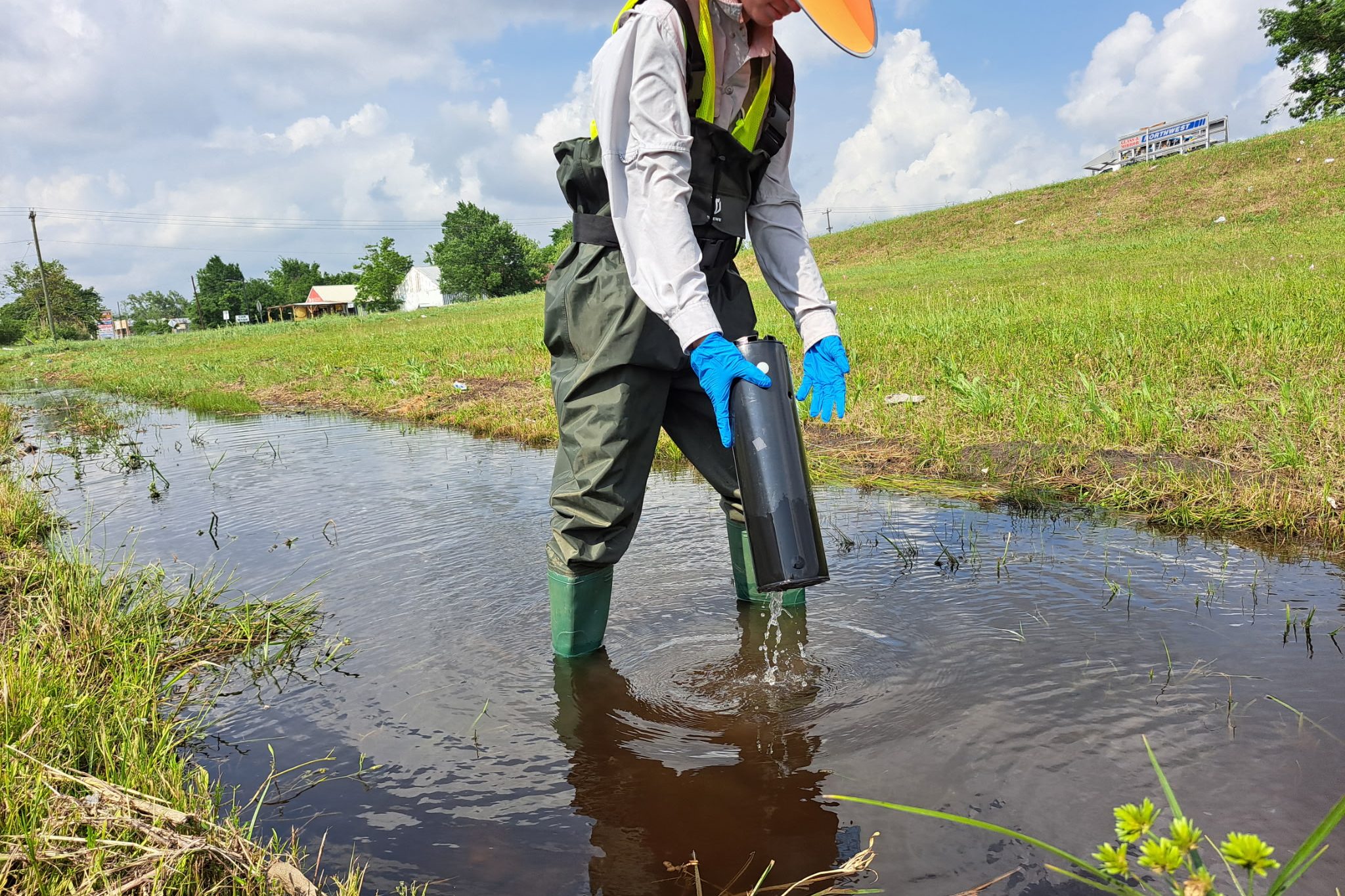
Geosyntec uses biological assessment and monitoring to create an accurate picture of the affected environment. Our services reliably evaluate the health of streams, rivers, lakes, and ocean environments. In addition, we can offer a less expensive alternative to complex chemical testing programs. Relying on deep experience, our team evaluates the ecological health of a given environment to show how organisms integrate the effects of varied stressors at your site over time. This means Geosyntec can characterize long-term ecological issues and understand the status of highly valued biological communities. By examining a variety of species, their life stages, their survival, and their health, Geosyntec deciphers complex relationships among habitats, bioregions, and ultimately, water and sediment quality. Geosyntec has experienced biologists who efficiently conduct fish and invertebrate collection for both site investigations and NPDES-permit compliance. We also partner with industry-leading laboratories to analyze samples, compile metric scores and data into a project database, and use geographic information system capabilities to define spatial relationships and ensure data consistency and comparability. Geosyntec's biological monitoring services include fish tissue collection for analysis of chemicals of concern; fish population and macroinvertebrate/plankton community studies; fish-kill investigations; and sediment infaunal invertebrate studies. We also conduct habitat inventories and assessments; sediment and water quality toxicity testing; ecological risk assessments; and Natural Resource Damage Assessments. Our practitioners compile environmental impact statements for compliance with National Environmental Policy Act requirements and consult with clients on Clean Water Act (CWA) Section 404 wetland permitting, Section 401 water quality certification, and threatened and endangered species surveys related to the Endangered Species Act (ESA) and Section 7 requirements. For more than a dozen clients, Geosyntec has monitored the concentrations of chemicals found in fish tissue over many years. Often, the fish community is exposed to chemicals via direct or indirect uptake from contaminated sediments. By monitoring the fish tissue concentrations over time, the effectiveness of an environmental remedy can be evaluated. Additionally, biota-sediment accumulation models can be developed and refined to support informed management decisions. This has been used for both active remedies (like dredging) and passive remedies (like MNR). These monitoring data provide our clients and the regulatory agencies with an accurate picture of the affected environment.

Environmental Impact Studies

2026-03-15T10:45:52-06:00March 27th, 2014|Tags: , , , , , , , , , , , , , , , , , , , , , , , , , |

For more than 40 years, strict adherence to guidelines under the National Environmental Policy Act requires all federal agencies to consider the environmental impacts of a broad scope of proposed actions and decisions as well as to consider any reasonable alternatives to those actions. Geosyntec's engineers and scientists offer clients decades of experience in the development of comprehensive environmental impact statements (EIS) for actions requiring federal authorization or that are otherwise subject to federal control. We also prepare EIS as required by regulations at the state and regional level around the country. Our practitioners across multiple disciplines lead the development of EIS for clients within the U.S. Department of Defense, U.S. Customs and Border Protection, the Federal Bureau of Prisons, the U.S. Air Force, and the U.S. Army Corps of Engineers, to name just a few. Impact statements are submitted for public comment periods throughout the development process. In addition, we guide clients through the review and comment by officials with the U.S. Environmental Protection Agency before a final EIS and record of decision can be infused into a program or action. As we develop an EIS, we ensure our detailed analysis provides a discussion of any significant environmental impacts affecting a project as well as the purpose of and need for proposed actions. We then review reasonable alternatives, including a No Action alternative, which would allow agency officials to avoid or minimize adverse impacts or enhance the quality of the human environment. These full disclosure documents detail the process through which a federal project was developed and demonstrates compliance with other applicable environmental laws and executive orders.

Constructed Wetland Treatment Systems

2026-04-21T07:19:22-06:00March 27th, 2014|Tags: , , , , , , , , , , , , , , , , , , , , , , , |

Constructed wetlands have shown great promise treating a variety of constituents in wastewater and groundwater impacted by ammonia, BOD, COD, iron, phosphorous, volatiles, and other contaminants. Geosyntec has significant experience in conducting a wide variety of wetlands-related projects. For example, Geosyntec has partnered in the design and implementation of innovative vertical-flow constructed wetlands systems and adapted this technology for the effective treatment of wastewater. The features of this technology include a small footprint, a modular design, and the system's operational stability throughout the year. Geosyntec has also designed constructed wetlands for treatment of stormwater runoff and in other applications of implementing best management practices (BMPs) for many years. We have further used innovative approaches involving constructed wetlands for treatment of metals and petroleum-related compounds, and we are involved in several treatability and pilot-scale studies to evaluate the use of constructed wetlands to treat a variety of contaminants in groundwater. Goals of these projects have included treatment, as well as to create and restore habitat for aquatic and terrestrial vegetation and wildlife, stabilize shorelines and prevent erosion and sedimentation, and improve water quality by attenuation of nutrient, pollutant, and sediment loads. Project goals have also included providing educational and recreational opportunities.

Wetland Delineation and Permitting

2026-03-15T10:45:46-06:00March 27th, 2014|Tags: , , , , , , , , , , , , , , , , , , , , , , , , |

Geosyntec practitioners are leaders in the development and application of science-based methods and tools for wetland identification and delineation. By determining the existence, location boundaries, and physical size of a wetland area, we help clients establish whether water bodies within a project area meet criteria for regulation under specific local, state, and federal jurisdictions. In addition, we make recommendations as to the size or width of any buffers that may be needed to protect water quality or habitats. Our field investigations and surveys establish clearly marked wetland boundaries, comprehensive delineation maps with data collection points, and site-specific information such as soil survey results or species composition and dominance data. We also can assess whether created or replicated wetlands function effectively and then aid clients in the application of this information to future design plans. This can include an evaluation of pre-construction design criteria and monitoring protocols. Once a wetland delineation is complete, Geosyntec guides clients through the permitting application process as outlined in Section 401 or Section 404 of the Clean Water Act as well as the various state and regional laws governing water bodies throughout the United States.

Modeling and Management of Stream Hydromodification Impacts

2026-03-15T10:45:46-06:00March 27th, 2014|Tags: , , , , , , , , , , , , , , , , , , , , , , , , , |

Geosyntec offers extensive experience in hydrologic and hydraulic modeling and the use of model output for the analysis of channel modifications and stream restoration projects. We frequently apply these models for long-term watershed and floodplain management. Our practitioners have decades of experience in the evaluation of hydromodification activities, such as channelization / channel modification projects and the construction of dams. We also examine the resulting stream bank and shoreline erosion impacts of hydromodification and how it might affect in-stream and streamside (or riparian) habitats for fish and wildlife. We develop and calibrate watershed hydrologic models and floodplain hydraulic models using new and existing data sources to examine both the volume reduction and control benefits of hydromodification projects. We also conduct stream restoration and open channel analyses to assist and design stream bank rehabilitation projects and to restore tidal flow in restricted salt marsh environments. Our geomorphic studies and sedimentation/scour analyses are used to understand issues of accelerated erosion or changes to sediment supply. We apply our expertise in open channel hydraulics to perform flooding analyses, including floodplain delineation, flow monitoring, and rating curve development. Geosyntec has developed excellent surface water modeling expertise including hydrodynamics, sediment transport, water quality, and fate and transport modeling. Geosyntec's expertise includes application of SWMM, HEC-HMS, HEC-1, HEC-2, HEC-RAS, RMA2/RMA4, EFDC, QUAL2k, River-FLO2D, CE-QUAL-W2, Computational Fluid Dynamics, and other models.

Go to Top