Geosyntec Consultants Logo

Washington

The Boeing Company Stormwater Treatment Real-Time Control and Monitoring

2026-05-11T13:18:42-06:00November 20th, 2024|

Following the installation of four vegetated media filters to remove pollutants from stormwater runoff at The Boeing Company’s Developmental Center in Tukwila, Washington, Geosyntec designed and installed a suite of internet-connected sensors to control submersible pumps and monitor the media filters’ performance. This work included monitoring soil moisture, soil temperature, ponding depth of water above the media, discharge through the filters, and rainfall at the site. Real-time data were aggregated and visualized on a web-based dashboard where users could explore the performance of the filters and toggle a pump to deliver stormwater from an underground vault to the filters. The system also allows users to receive automated emails and text messages when sensors record values above user-defined thresholds.

The Nature Conservancy Stormwater Heatmap

2026-04-02T16:53:18-06:00February 27th, 2024|

Stormwater pollution is a significant environmental challenge in urban areas, including in Washington’s Puget Sound watershed. Geosyntec collaborated with The Nature Conservancy to develop a public, online tool to help residents and decision-makers understand runoff into the Puget Sound and make informed decisions about how to manage stormwater. Geosyntec helped The Nature Conservancy build its Stormwater Heatmap, an interactive open-source mapping tool, report generator, and data repository that quantitatively visualizes where pollution is generated and how and where it becomes runoff throughout the watershed. This transformational tool is a model for proactive stormwater management and conservation efforts in the Puget Sound region and across the United States.

West Fork of the Hoquiam Dam Removal and Water Supply Source Replacement

2026-04-02T16:53:16-06:00November 15th, 2023|

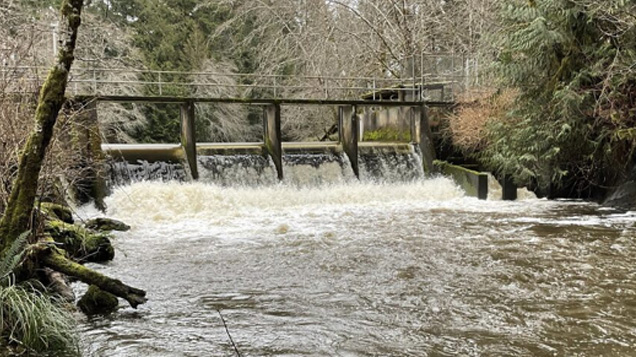
The City of Hoquiam, Washington, constructed a concrete dam on the West Fork of the Hoquiam River in 1956 to supply drinking water to its residents and is now working to remove this aging dam, restore the stream, and develop an alternative drinking-water source. In conjunction with dam removal, the City plans to replace the surface water intake with groundwater wells to improve the water supply and water quality. Removal of the dam will restore natural alluvial processes and improve streamflows, benefiting native fish species including salmon, which are experiencing dramatic declines. Additionally, this project will remove the necessity of dealing with aging infrastructure while providing the City with a more reliable water supply.

Regional Haze Four-Factor Analysis for Paper Company

2026-04-02T16:01:02-06:00September 21st, 2023|

Geosyntec was engaged by McKinley Paper Company to review the reasonably available control technologies (RACT) for the facility’s power boilers. We then prepared a four-factor analysis report for submittal to the Washington State Department of Ecology for compliance with the regional haze rule under the Clean Air Act. This rule requires specific industries to conduct periodic evaluations to find ways to reduce emissions of pollutants that contribute to haze and reduce visibility in National Parks and other Federal Class I areas. Regulated pollutants under the regional haze regulations include sulfur dioxide, nitrogen oxides, particulate matter less than 10 microns, sulfuric acid mist, and ammonia.

Enhanced Natural Recovery/Activated Carbon Pilot Study of the Lower Duwamish Waterway

2026-05-26T09:19:38-06:00March 9th, 2020|

The Lower Duwamish Waterway (LDW) Superfund Site is a five-mile-long, 440-acre, federally authorized navigation channel that has served the City of Seattle and regional port needs for more than 90 years.

Developing a Lines-of-Evidence Approach to Assessing PFAS Treatment Technologies

2026-04-02T16:53:16-06:00October 17th, 2019|

Better treatment technologies are needed to address the contamination of surface water and groundwater resources by per- and polyfluoroalkyl substances (PFAS), a family of thousands of man-made compounds that are rapidly emerging as potential risks to human health and the environment. The U.S. Department of Defense (DoD), Environmental Protection Agency, and others have funded research and development of innovative treatment approaches. Proponents of several innovative treatment technologies have claimed success in removing or destroying PFAS. However, removal mechanisms are often not understood, byproducts may not be measured, and the technology's effect on different PFAS mixtures may be unknown. To improve the return on investment and guide future investments in PFAS treatment technologies, Geosyntec led a team of PFAS researchers to develop practical decision tools, metrics, and guidance to inform the evaluation of the effectiveness of new PFAS treatment technologies.The U.S. Department of Defense (DoD), Environmental Protection Agency, and others have funded research and development of innovative treatment approaches. Proponents of several innovative treatment technologies have claimed success in removing or destroying PFAS. However, removal mechanisms are often not understood, byproducts may not be measured, and the technology's effect on different PFAS mixtures may be unknown. To improve the return on investment and guide future investments in PFAS treatment technologies, Geosyntec led a team of PFAS researchers to develop practical decision tools, metrics, and guidance to inform the evaluation of the effectiveness of new PFAS treatment technologies.

Perfluoroalkyl Substances in Municipal Drinking Water

2026-04-02T16:53:15-06:00October 17th, 2019|

Perfluorooctanesulfonic acid (PFOS) was detected in a water supply production well owned by the City of Issaquah as part of sampling required under the federal Unregulated Contaminant Monitoring Rule (UCMR). PFOS is one of a group of thousands of similar man-made polyfluorinated compounds that are rapidly emerging as potential hazards to human health and the environment. PFOS was found at levels in excess of the US EPA advisory level of 0.07 parts per billion (ppb), the source of which was not known among multiple possibilities. Geosyntec was retained to help the impacted city respond to the detection of PFOS in their system, identify and characterize the extent of PFOS contamination in their shallow and deep aquifers, help them evaluate long-term water supply and treatment options, and present technical information and respond to the City Council and the general public.

Go to Top