Geosyntec Consultants Logo

United States

Site Assessment and Comprehensive Remedial Strategy using Phytotechnology at a Former Wood Treating Facility and Sawmill

2026-04-06T11:37:17-06:00October 24th, 2009|Tags: |

The plant site was a former wood treating facility and sawmill that dates back to the 1950's. Wood-treating operations ceased around 1980, and a residential/commercial building material supplier currently uses the facility. Previous work, initiated in 1986, included site assessment and/or corrective action activities (i.e., source removal efforts), which continue to the present. The major contaminants of concern in soils are arsenic and dioxin (expressed as 2,3,7,8-TCDD Toxicity Equivalents), while groundwater below parts of the site is impacted by arsenic. Historically, Pentachlorophenol has been found in groundwater in very isolated areas, but has been naturally attenuated following the source removal efforts. Southern Wood Piedmont (SWP) retained Geosyntec to conduct additional site assessment activities, and to develop a comprehensive remedial strategy to resolve remaining on- and off-site issues. The property was divested in 2006; however, Rayonier is responsible for historic offsite releases.
In Situ Chemical Oxidation of TCE in Fractured Bedrock

2026-04-06T11:39:22-06:00October 24th, 2009|Tags: , , |

At this site, TCE DNAPL is present in highly fractured bedrock that is currently used by the local municipality as a drinking water supply. In summer 2001, the U.S. EPA issued a Preferred Remedial Action Plan (PRAP) for the site, primarily consisting of pump and treat remedy components for both the source area and the plume. The Client retained Geosyntec to demonstrate to U.S. EPA and the Pennsylvania Department of Environmental Protection (PADEP) that pump and treat would not result in remediation of the source area within any reasonable timeframe.

Corrective Action and LNAPL Plume Remediation at a Retail Gas Station

2026-06-16T14:30:13-06:00October 24th, 2009|Tags: |

A group of off-site property owners successfully sued Coastal Mart, Inc. (CMI), a retail convenience store/gas station chain owned by El Paso Corporation Oil & Gas, for contamination from a store in McAllen, Texas. Post-trial negotiations resulted in remediation of the now-closed store property and related contamination beneath nearly four acres of adjacent commercial and residential properties. Geosyntec was retained to provide corrective action services with the objective of cleaning up a phase-separated hydrocarbon (PSH) plume and groundwater.

Combined Co-Solvent Soil Flushing and In Situ Bioremediation at a Former Industrial Waste Disposal Site

2026-04-06T13:22:12-06:00October 23rd, 2009|Tags: , |

This 30-acre site was the former location of a disposal area burn pit where a wide variety of liquid and solid wastes generated from a nearby manufacturing facility were disposed and periodically burned off. A site investigation began in 1984 under an order issued by the Tennessee Department of Environment and Conservation (TDEC). Primary contaminants of concern at the site include halogenated solvents such as trichloroethylene (TCE), 1,1,1-TCA, and Freon 113. The TDEC issued a Record of Decision (ROD) in 1996 that specified multiple remedies, including soil vapor extraction (SVE), focused excavation, and soil flushing for soils in the burn pit area. The monitoring data collected after a SVE system had been in operation for five years suggested asymptotic performance. The client retained Geosyntec to design and implement a soil flushing pilot test for a comprehensive approach integrating the soil flushing remedy with the site's groundwater remediation program.

Interactive Geographical Information Systems and Application Development for Data Management, Herbert Hoover Dike Rehabilitation, Lake Okeechobee, Florida

2026-06-16T14:30:18-06:00October 23rd, 2009|Tags: , |

The Herbert Hoover Dike (HHD) rehabilitation project is designed to stabilize and secure the aging dike from potentially damaging severe weather events, and protect the numerous residents and businesses on the southeastern rim of Lake Okeechobee. In 2007, the U.S. Army Corps of Engineers (USACE) placed the HHD on the Top 6 list of dams in the nation needing repair. The USACE Jacksonville District prioritized rehabilitation of dike segments that were identified as most vulnerable, focusing initial efforts to achieve the most significant impacts. In May 2008 the Jacksonville District selected Bauer Foundation Corp. (BFC) to construct a 3-mile long segment of the planned cutoff wall that runs vertically from the dike crest to a depth of 70 feet in certain locations.The challenge of compiling and viewing the large quantity and diversity of data collected for this project required an innovative solution. In December 2008 BFC selected Geosyntec to develop an application by which BFC and its client, USACE, could view the data as it is collected and interactively search for values and generate time-critical reports.

Geotechnical Investigation and Landslide Stabilization at Vandale Junkyard Superfund Site

2026-06-16T14:30:23-06:00October 23rd, 2009|Tags: |

The Vandale Junkyard NPL site was operated as a permitted junkyard for over 40 years, and was included on the NPL in 1986. After extensive site investigation activities conducted by others, U.S. EPA Region 5 issued the Record of Decision (ROD) in 1994 calling for a non-time critical remedy involving capping. During the junkyard's active life, waste in one area of the site was ignited at the top of a 150-ft high slope, which resulted in a solid waste residue (SWR) consisting of glass, metal debris, and ash mixed with soil. The SWR was pushed down the slope over the natural colluvium present over bedrock. The planned remedy developed by others for the site included placement of stockpiled waste from other areas of the site over the SWR and a final cover system installed over the placed waste materials. At the onset of remedy implementation, it was discovered that the hillside was geologically unstable and the surficial SWR and colluvial soil were actively creeping downslope. The EPA required the site PRP group to quickly investigate the cause of the geologic instability and to develop a revised site design to stabilize the slope and achieve the environmental remedial action objectives. The PRPs retained Geosyntec to undertake this scope of work.

Field Exploration and Laboratory Testing Program to Support Gabion Wall Stability Assessment

2026-04-06T13:19:19-06:00October 22nd, 2009|

A Fortune 100 company requested that Geosyntec provide a technical assessment and evaluation of a 2,200-foot long gabion-faced combination gravity and mechanically stabilized earth wall at one of its major distribution centers in the eastern United States. Other retaining structures on the project site experienced significant movements or collapse. Previous consultants expressed concern regarding the long-term stability and distress for this wall such that the owner would be required to initiate major rehabilitation activities to stabilize it. The owner was actively considering complete wall rehabilitation at an estimated cost of $2.5 million.

Non-Urban Levee Evaluation Program

2026-06-16T14:30:20-06:00October 22nd, 2009|

The California Department of Water Resources (DWR) is leading a multifaceted initiative called FloodSAFE California to improve integrated flood management throughout the state, with an emphasis on improved flood risk management related to the state-federal flood protection system in the Central Valley. DWR is evaluating approximately 1,230 miles of non-urban levees.The Non-Urban Levee Evaluation (NULE) Program team is assessing the condition of non-urban State-federal project levees and associated non-project levees, to determine conformance with geotechnical criteria and, where needed, identify remedial measures, including cost estimates, necessary to meet those criteria. The information being developed through the NULE Program will be used within the Central Valley Flood Management Planning Program to inform development of two required documents: the Flood Control System Status Report and the Central Valley Flood Protection Plan.

SSHAC Level 3 Seismic Hazard Update for the Diablo Canyon Power Plant

2026-04-02T14:31:20-06:00October 21st, 2009|Tags: , |

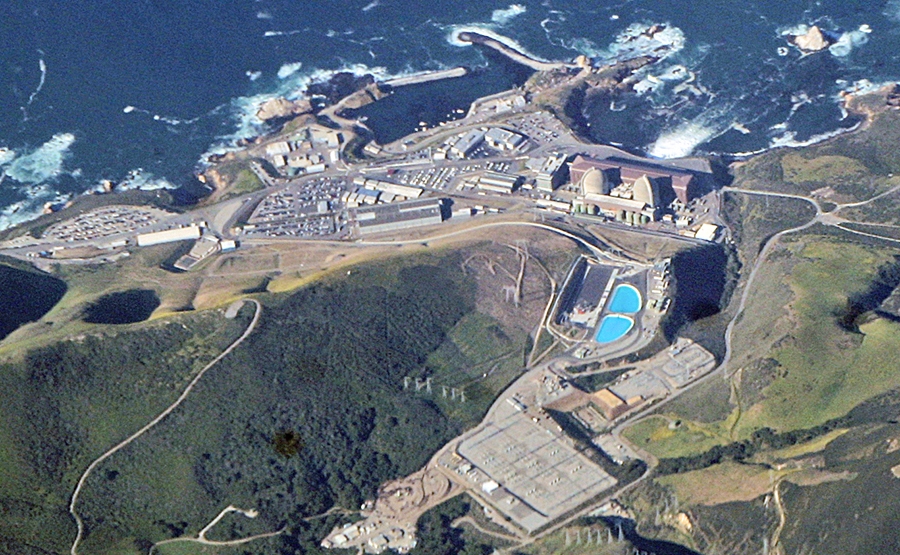
A seismic hazard update is currently being conducted for the Diablo Canyon Power Plant (DCPP) Site under the Senior Seismic Hazard Analysis Committee (SSHAC) Level 3 process. The SSHAC Level 3 process is a formal, structured procedure for developing Seismic Source Characterizations (SSC) and Ground Motion Characterizations (GMC), and has been identified in Nuclear Regulatory Commission regulatory guidance (RG 1.208) as an acceptable method for use in performing probabilistic seismic hazard analysis (PSHA) for nuclear sites.

The SSC and GMC for the DCPP site will involve complex assessments due to the location of the site within an active tectonic region of the United States. The seismic safety issues at DCPP will be subject to significant public and regulatory scrutiny. The SSHAC Level 3 update will re-examine parameters of the GMC and SSC in light of recent and ongoing studies with the objective of developing updated models that capture the center, body, and range (CBR) of the technically defensible interpretations (TDI).

Field-Scale Verification of Engineering Properties for Sluiced Fly Ash

2026-04-06T13:04:26-06:00October 20th, 2009|Tags: |

American Electrical Power (AEP) is developing a 348-acre residual waste landfill (RWL) located over portions of an inactive fly ash reservoir (FAR) and an area of historic mine spoil deposits near Brilliant, Ohio. Geosyntec's design required the sequential development of the RWL with a preloading period. To develop a better understanding of the required preloading period, Geosyntec designed and implemented a monitored preload fill (MPF) test program to evaluate the specific in-place compression and drainage characteristics of the fly ash in the FAR.

Go to Top