Geosyntec Consultants Logo

United States

Regional Haze Four-Factor Analysis for Paper Company

2026-04-02T16:01:02-06:00September 21st, 2023|

Geosyntec was engaged by McKinley Paper Company to review the reasonably available control technologies (RACT) for the facility’s power boilers. We then prepared a four-factor analysis report for submittal to the Washington State Department of Ecology for compliance with the regional haze rule under the Clean Air Act. This rule requires specific industries to conduct periodic evaluations to find ways to reduce emissions of pollutants that contribute to haze and reduce visibility in National Parks and other Federal Class I areas. Regulated pollutants under the regional haze regulations include sulfur dioxide, nitrogen oxides, particulate matter less than 10 microns, sulfuric acid mist, and ammonia.

Corporate Greenhouse Gas Inventory for a Global Oil and Gas Company

2026-04-02T16:01:02-06:00September 21st, 2023|

Geosyntec was engaged by a global oil and gas client to develop a corporate greenhouse gas (GHG) emission inventory incorporating data from more than 400 sites in the United States and internationally. Geosyntec provided expert guidance on inventory methods for national and jurisdictional compliance reporting and for voluntary GHG disclosures. The goal of the project was to develop an efficient and effective GHG data system to support corporate capital and operational decision-making, compliance reporting, and corporate disclosures.

Air Permitting and Regulatory Analysis

2026-04-06T13:38:38-06:00September 14th, 2023|

A toy production company planned to build a new manufacturing facility in the United States in the Richmond, Virginia, area and needed a qualified firm to evaluate air permitting and other environmental compliance requirements for the proposed facility. The client wanted a firm that understood the importance of the local requirements and the urgency of obtaining the required air permit to enable facility construction to proceed on the pre-determined tight schedule. The client also needed a firm that could quantify emissions for the planned equipment and operations and navigate the Virginia Department of Environmental Quality (VaDEQ) regulations and requirements. The main objective of this project was to accurately and completely assess the air permit requirements and expeditiously submit a complete and accurate air permit application to VaDEQ.

Environmental Compliance for an Airport Equipment Manufacturer

2026-04-06T13:39:12-06:00September 14th, 2023|

This project addressed several environmental gaps identified during ownership transition at a facility that manufactures aviation ground equipment. The facility needed a spill control, prevention, and countermeasure (SPCC) plan, a stormwater pollution prevention plan (SWP3), and a different air permit. Potential gaps in environmental reports were also noted. Geosyntec was engaged to close the identified gaps and maintain environmental compliance.

Environmental Reporting for a Paper Coating and Laminating Facility

2026-04-06T13:39:57-06:00September 13th, 2023|

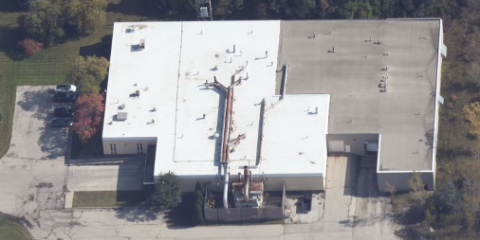
A family-owned paper coating and laminating facility that had operated in New Berlin, Wisconsin, since the 1920s did not have a full-time environmental manager and needed help complying with environmental regulations and reporting. Geosyntec was retained to support the company’s risk management program by helping the client understand its environmental reporting obligations and fulfill those obligations expeditiously and cost-effectively.

Comprehensive Continuing Coastal Engineering Services

2026-04-06T13:40:39-06:00April 14th, 2023|

ATM, a Geosyntec Company, is the on-call coastal engineering consultant for Holden Beach, North Carolina, and provides specialized expertise to protect and manage the shore and coastline of this small coastal-island town. ATM supports emergency storm response management, erosion control measures, mitigation projects, and beach renourishment.

Site Adjustment Factors Applied to Response Spectra for Hard Rock Dam Sites

2026-04-02T16:02:54-06:00April 12th, 2023|

A power utility previously conducted seismic hazard evaluations for their portfolio of dams in the Sierra Mountain region of California. Those seismic hazard evaluations utilized a reference rock condition with a VS30 equal to 760 m/s. In 2018, Part12D Safety Inspections were completed for six of the dams and included recommendations that site-specific adjustment factors be evaluated and applied prior to performing seismic analyses of the dams. The objective of this project was to develop site adjustment factors that can be used to adjust the response spectra from the reference rock conditions used in the seismic hazard evaluations to the site-specific foundation conditions for each site.

Seismic and Probable Maximum Flood Safety Evaluations for a Concrete Dam

2026-04-06T13:41:46-06:00April 12th, 2023|Tags: |

Stability under seismic and probable maximum flood loads was performed for a 345-foot-high thick arch concrete dam located in the Northern California. The construction of this dam was completed in the 1920’s and its hydropower structures are regulated by the Federal Energy Regulatory Commission (FERC).

Dam Soil-Structure Interaction Model

2026-04-02T16:01:01-06:00April 12th, 2023|Tags: |

This concrete dam built in the 1940s includes a gated spillway section, powerhouse, and nonoverflow sections in the center of the dam with zoned fill embankment on the left and right sides of the concrete structures. Concrete core walls were constructed in the embankment wrap around areas to provide seepage control. Early in the service life of the facilty settlement in retaining walls on the crest and downstream rotational movement of the concrete core walls were observed. Retaining wall settlements on the order of several feet and core wall deformations on the order of 5 inches in the downstream direction were recorded. The objective of the project was to identify and fill data gaps related to dam performance, develop comprehensive models of the structures, identify causal mechanisms, and perform a field investigation to evaluate the conditions contributing to deformations and the current state of the dam related to risk driving Potential Failure Modes (PFMs)

Go to Top